The country in between
is yours to solve.
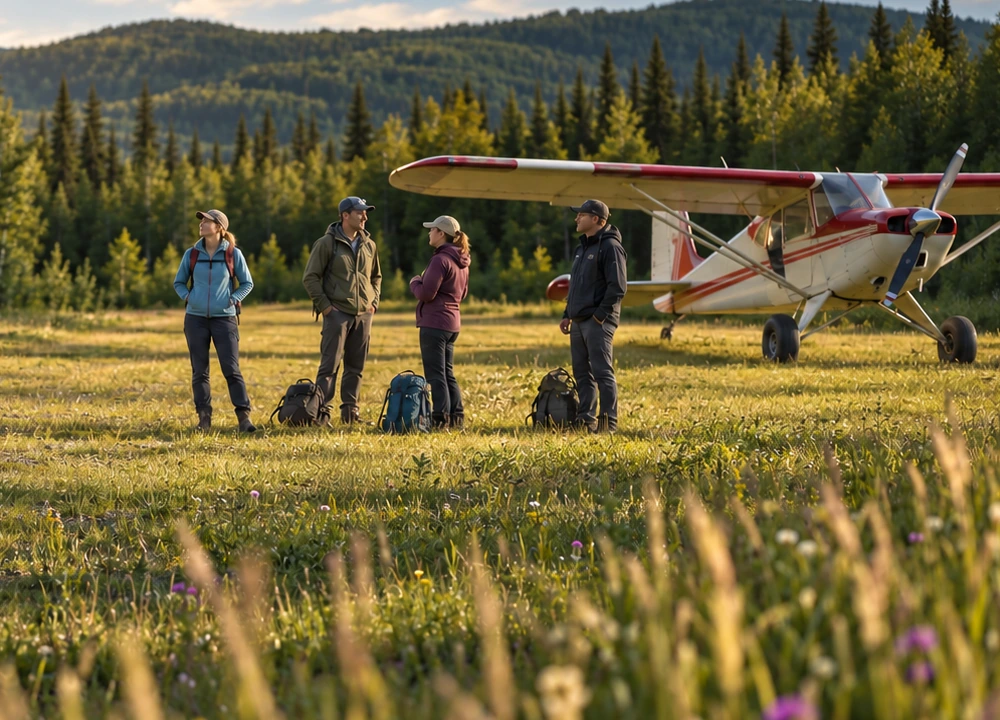
A bush plane takes your party and expedition leader into one drainage. The planned exit lies beyond a divide, down a different river.
Between them, you have a part to play: reading the land, proposing a way forward and working with your guide to make the next decision. A field book gives each stage a clear objective.
Cross the divide. Find the river. Paddle towards the other side.
02 / Terrain & movement
The Line
Cross the divide. Find the river.
Leave through another drainage.
01 / 05 · Read the land
The Drop
Scroll to follow the route · Select a chapter to explore
The objectives are designed.
The wilderness is real.

Chapter I / Beyond the roads
The Drop
The aircraft brings you to the starting point, not to a viewpoint.
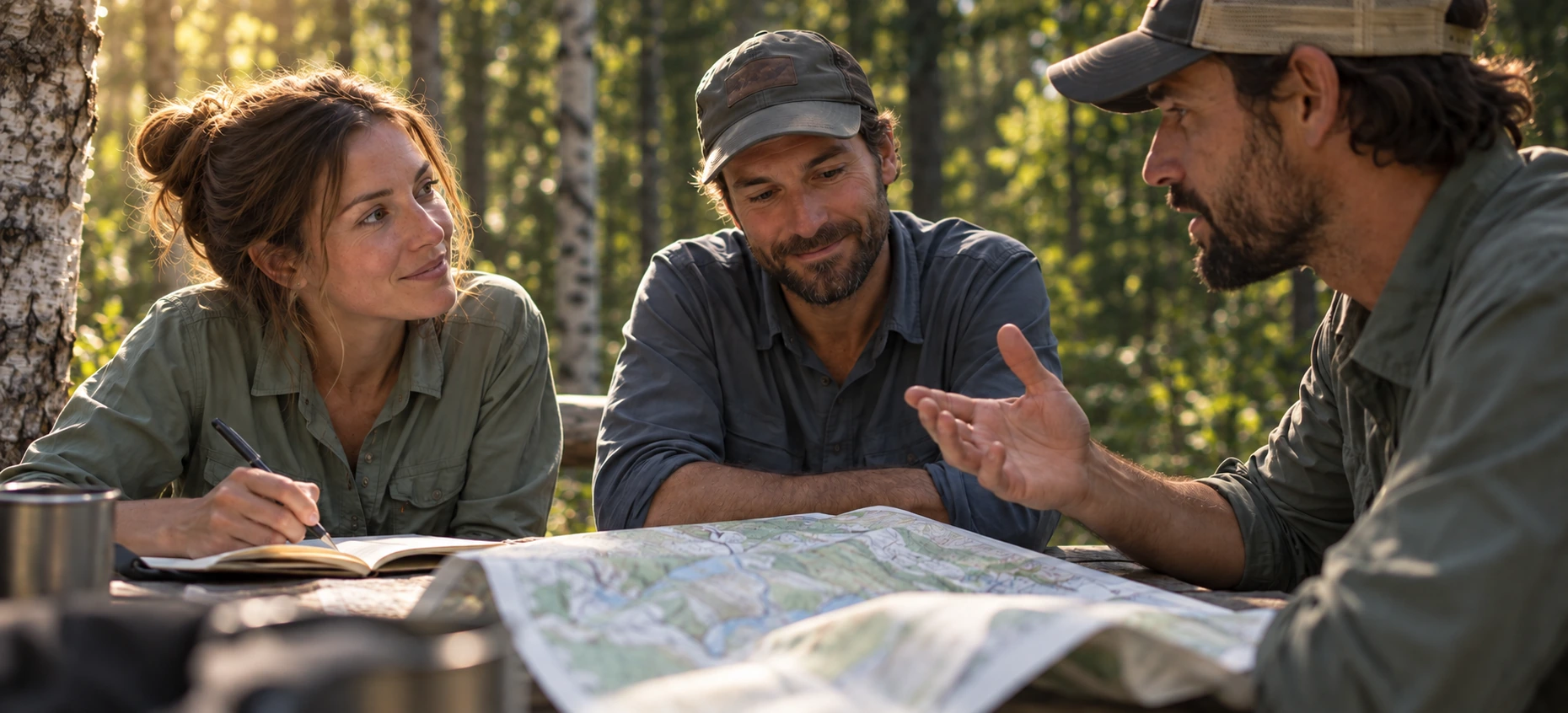
After landing, prepare with the expedition leader and open the field book. The first objective is to match the map to the country in front of you. Where does the water run? Where does the high ground begin?
Once the group is ready, the crossing starts.
Chapter II / On foot
The Divide
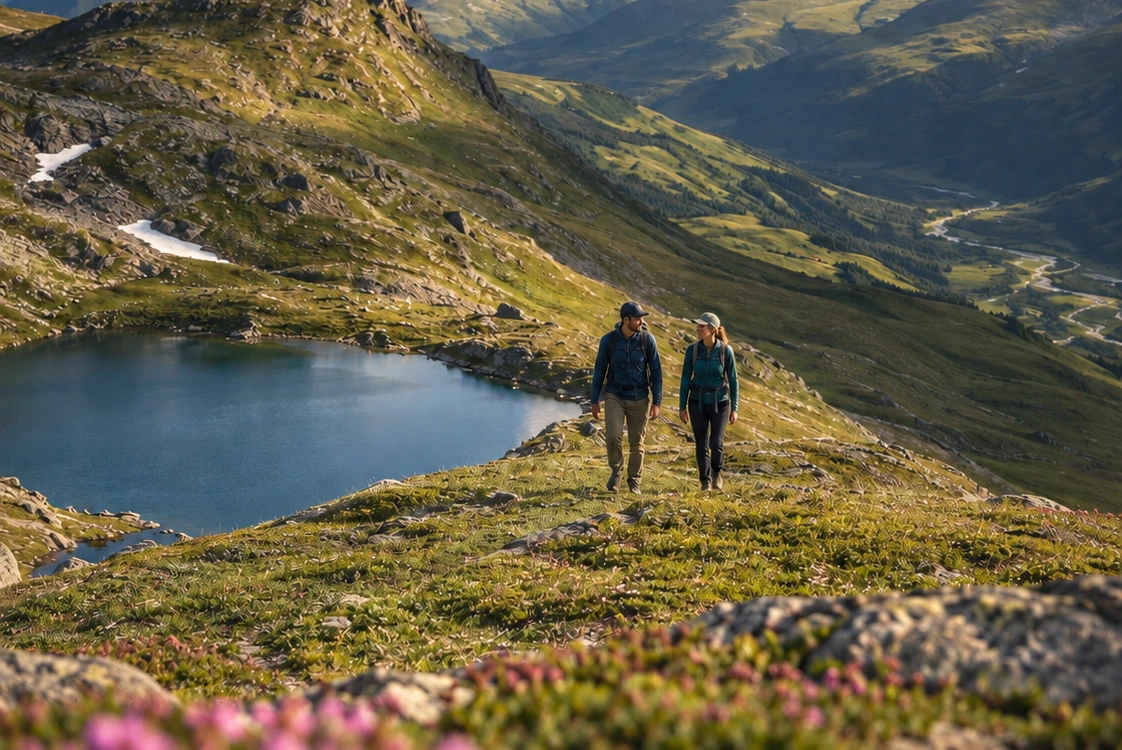
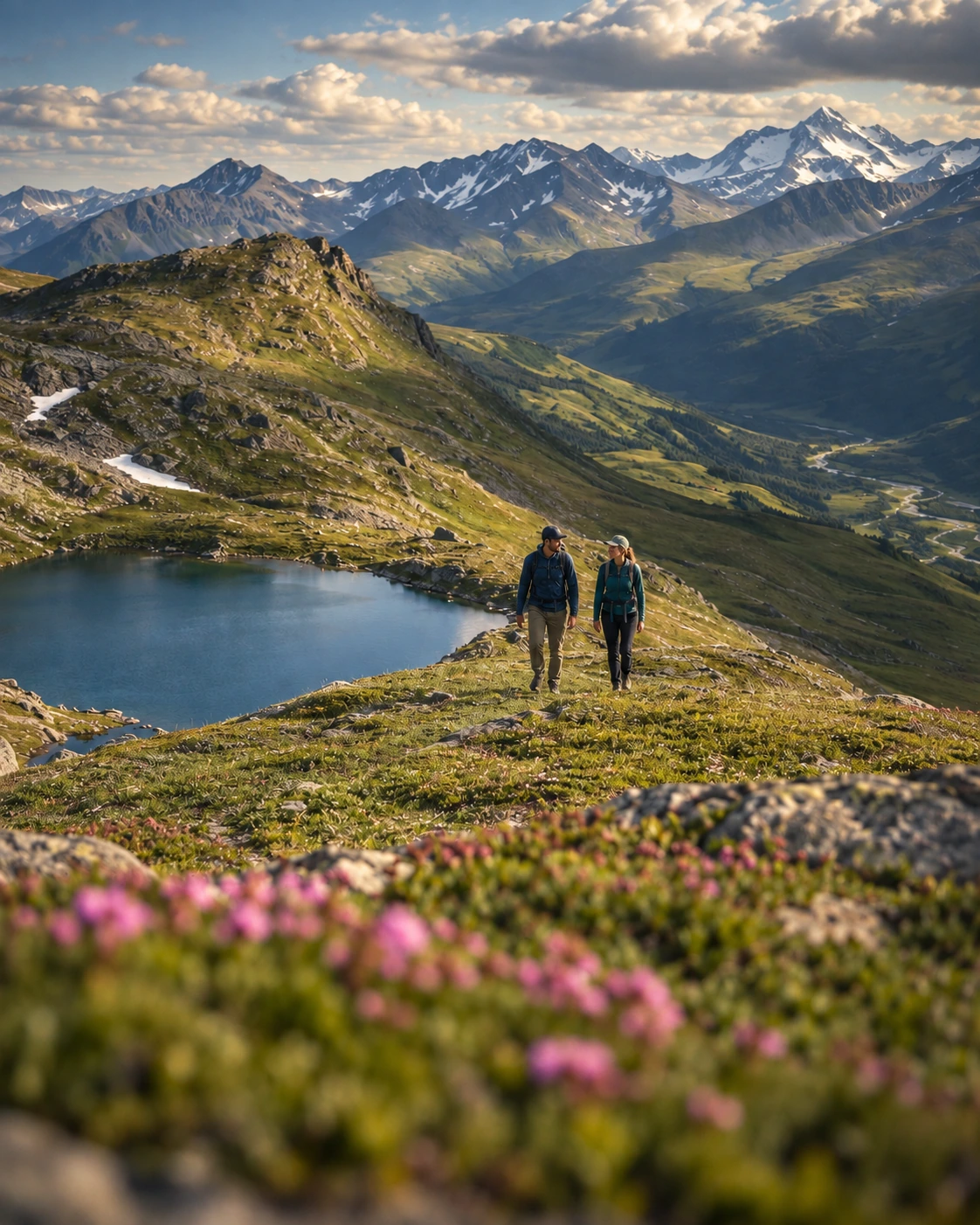
Work uphill through the first drainage, comparing the shape of the valley with the contours on your map.
Near the divide, the view changes. Behind you is the country you entered; ahead is a different basin. Cross with your guide and see what a watershed boundary means at walking pace.
The next river lies on the other side.
Chapter III / From land to water
Find the River
Follow the new drainage towards the water.
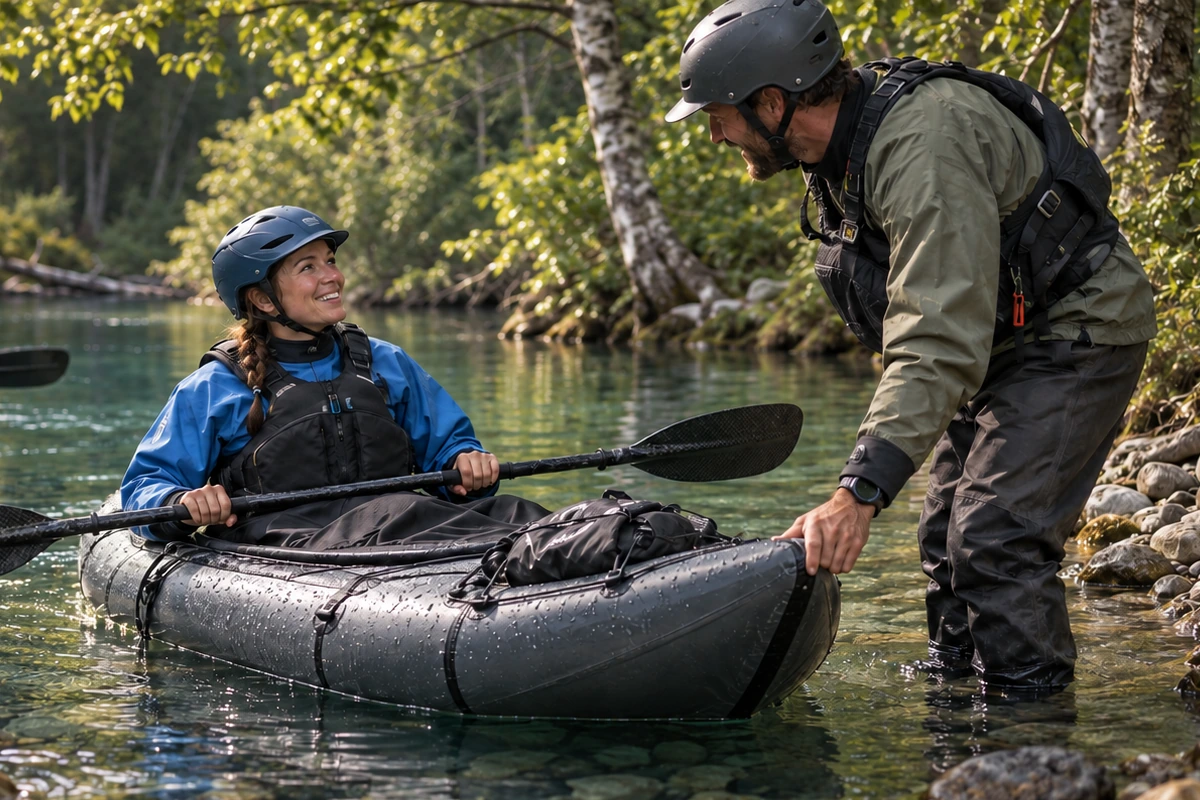
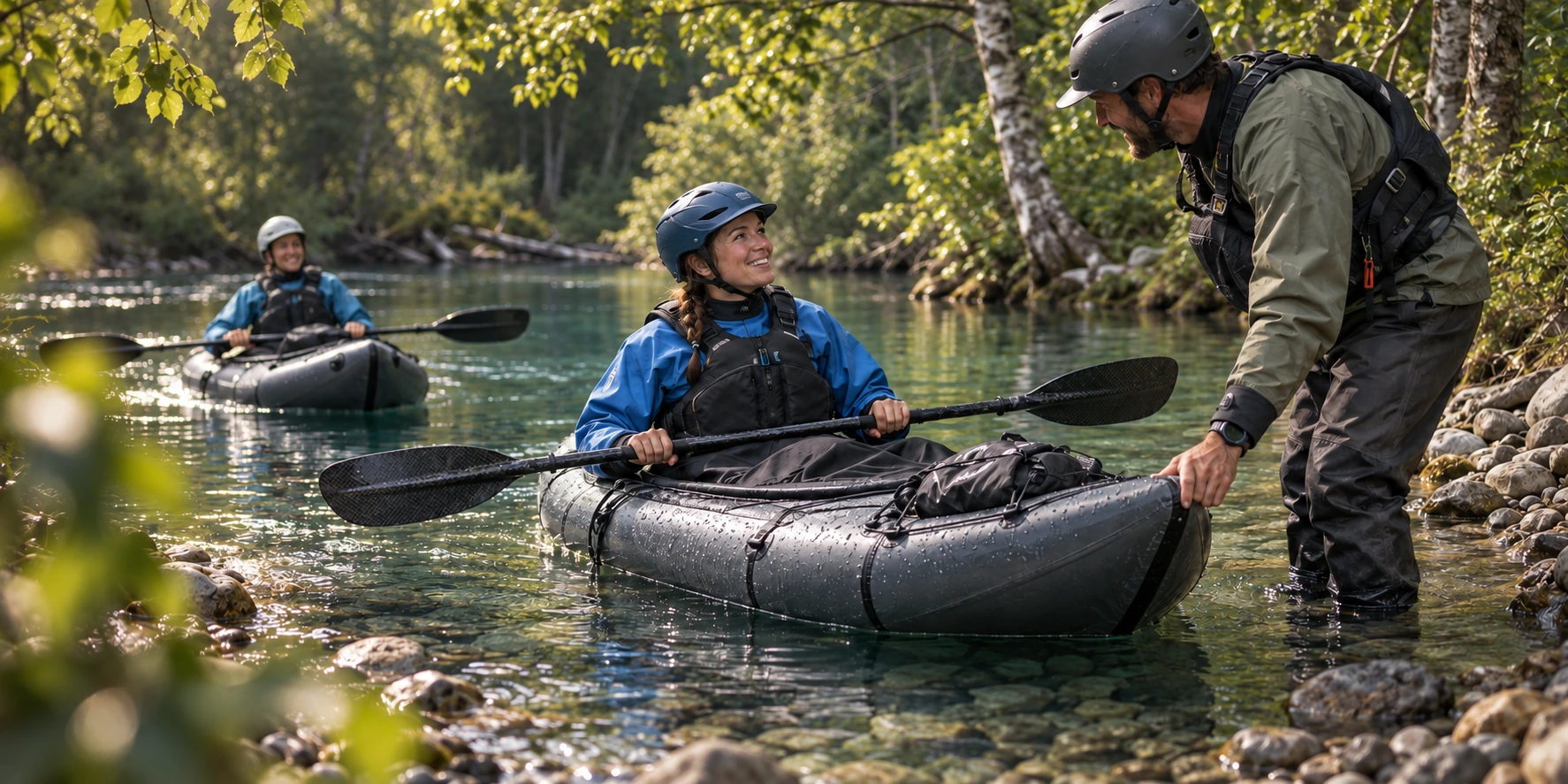
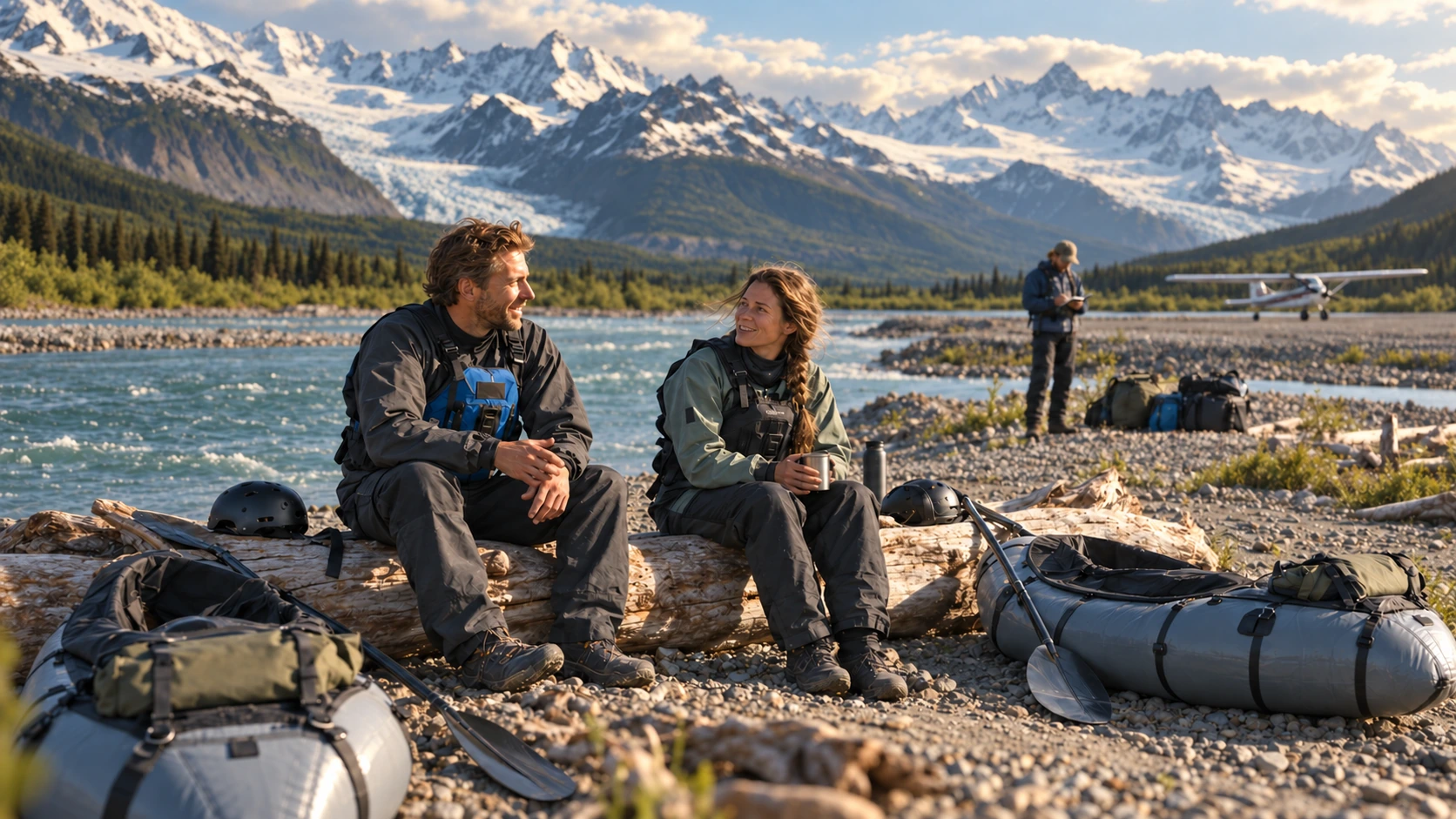
The party helps identify the river and compare possible approaches; the river guide decides where launching is appropriate. Unpack the boats you have carried, inflate them and prepare together.
The water that appeared as a line on your map is about to become the way you travel.

Chapter IV / With the flow
The Current
Now the view comes from the river.
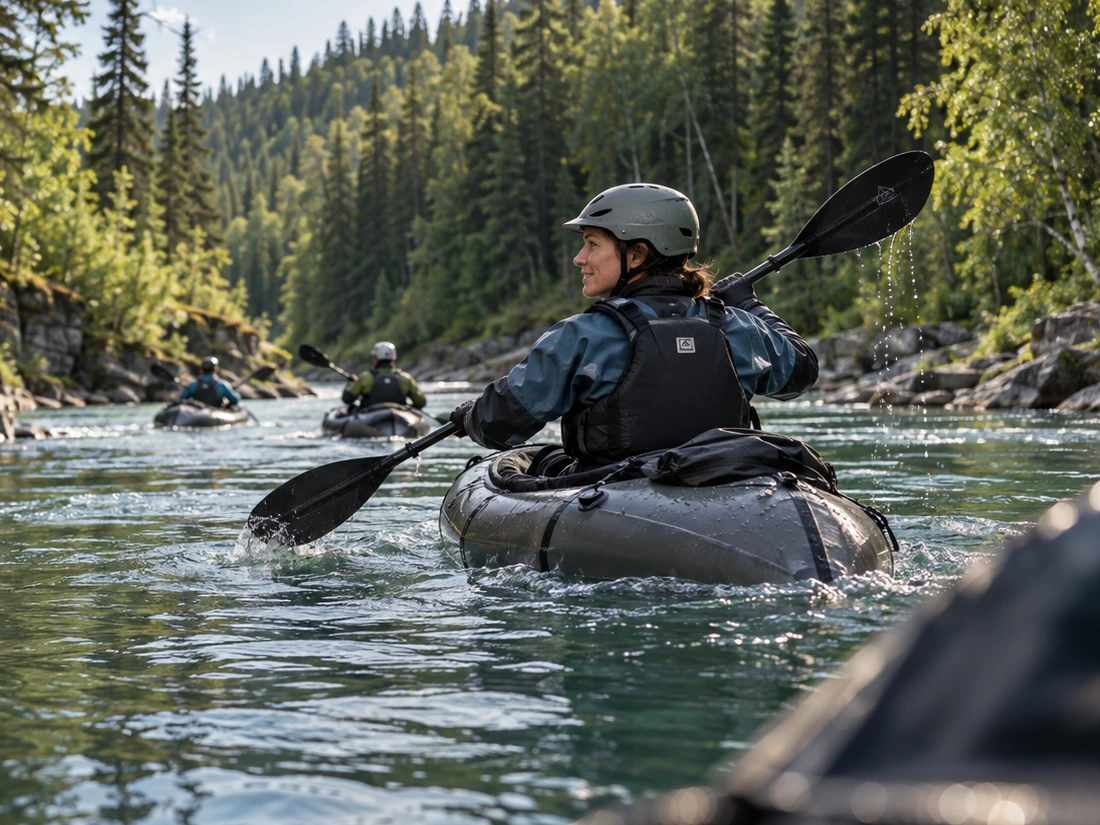
The valley opens around the boats and the banks begin to pass. You paddle with the team, learning to notice how channels, current and terrain fit together.
It is still an active journey. But the pack on your shoulders is now in the boat, and the country moves past at a different pace.
Chapter V / A separate air exit
The Other Side
The final riverbank is not where the aircraft left you.
Lay the map beside the field book and trace the line your party has travelled: one drainage in, another out. Pack down the boats for the agreed pickup, with its timing and location subject to conditions.
The record you take home is a crossing you helped work out.
One watershed in. Another way out.
The Stay &
Food
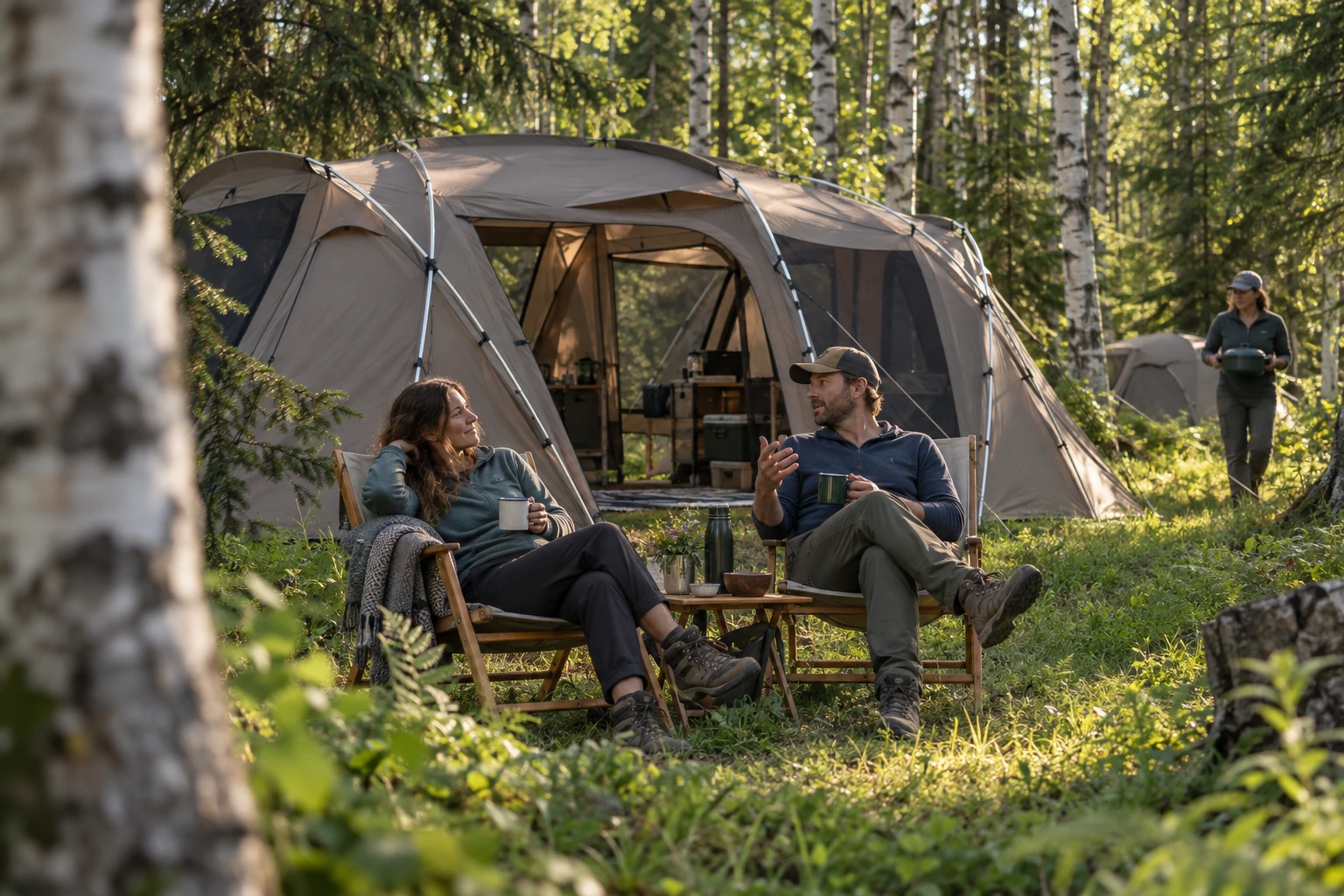
Once on the line, nights are spent in expedition camps, not lodges.
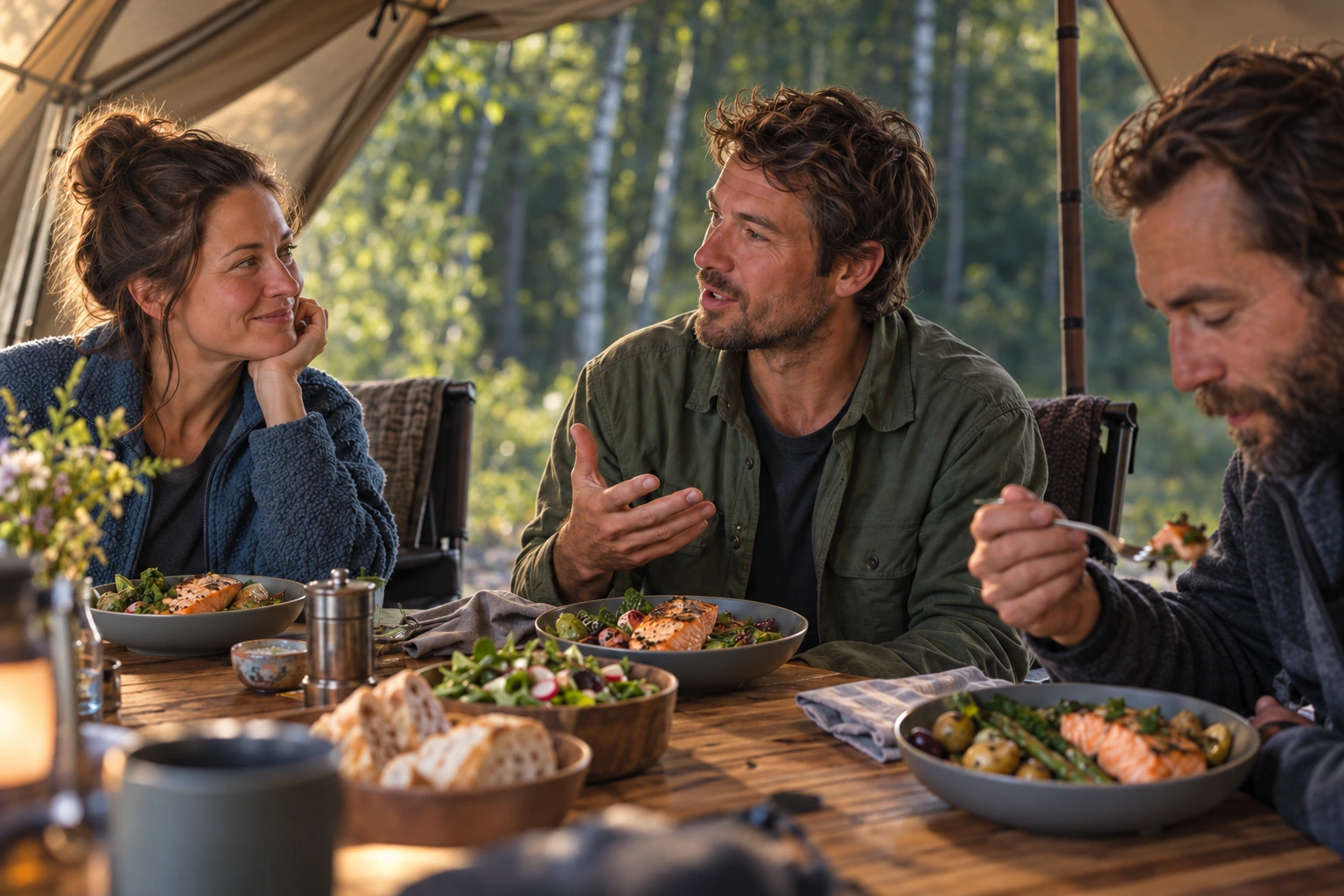
Sleeping equipment is chosen for the conditions, meals are planned for days outdoors and the team organises camp around the crossing. There is work to share, but the planning is not left to you.
Rest is part of the expedition, not something saved for the flight home.
You feel the journey. Not the logistics.
A clear objective
Each stage has a purpose. The field book turns the crossing into observations and decisions you can take part in, rather than a timetable you simply follow.
Decisions with a guide
You compare the map with the ground and help work out the next step. The expedition leader stays with the party and manages the boundaries within which those decisions are made.
The work behind the crossing
Aircraft arrangements, equipment preparation, food planning and communications are organised around the expedition. Changes are handled by the team, not left for guests to coordinate between operators.
An honest wilderness journey
You carry a share of the equipment and live in expedition camps. The support removes avoidable uncertainty around the trip; it does not pretend that the walking, paddling or wilderness have disappeared.
Safety
This is a guided wilderness expedition, not a survival challenge.
The expedition and river teams manage route and activity decisions; aircraft operations remain subject to the pilot’s judgement. Weather, water and ground conditions may require waiting, rerouting, changing activities or ending the crossing early.
Essential safety information is shared, not hidden for the sake of suspense.
What to know before you go
- Experience / fitness
- This is a demanding journey involving consecutive days of hiking, wilderness camping and packrafting. Fitness and relevant experience are reviewed before a booking is confirmed; route-specific requirements are provided in advance.
- Guest navigation
- You take part in map reading and route discussions with a professional leader. You are not sent off alone, and guidance is available whenever needed.
- What guests carry
- Expect to carry a meaningful personal load and a share of the expedition equipment. The final packing list and load are confirmed before booking.
- Route information
- You receive an overview, participation requirements and essential safety information before departure. Field objectives are introduced as the journey unfolds; necessary maps and emergency information are not withheld.
- Weather and changes
- The planned crossing and air transfers depend on conditions. Waiting, alternatives or an early exit may be necessary. Contingency arrangements, timing buffers and the applicable change or cancellation terms are explained before booking.
- Insurance
- Journey-specific insurance requirements are provided before booking. Guests should confirm with their insurer that the proposed activities, location and emergency evacuation arrangements are covered, including any exclusions or limits.