
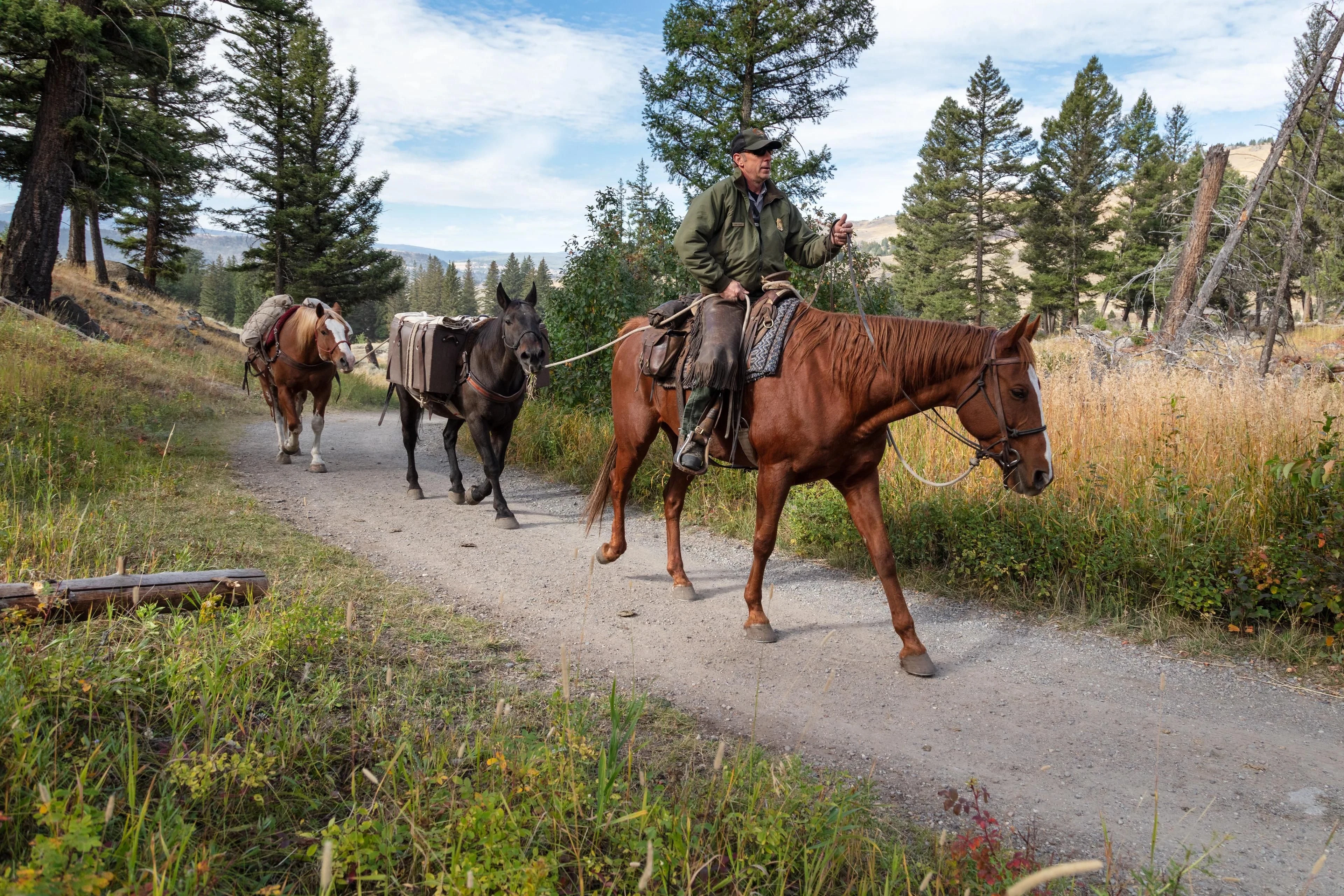
In the Purcell Mountains of British Columbia, an old trail above Fry Creek preserves a small piece of transport history.
A placer claim was established there in 1893.
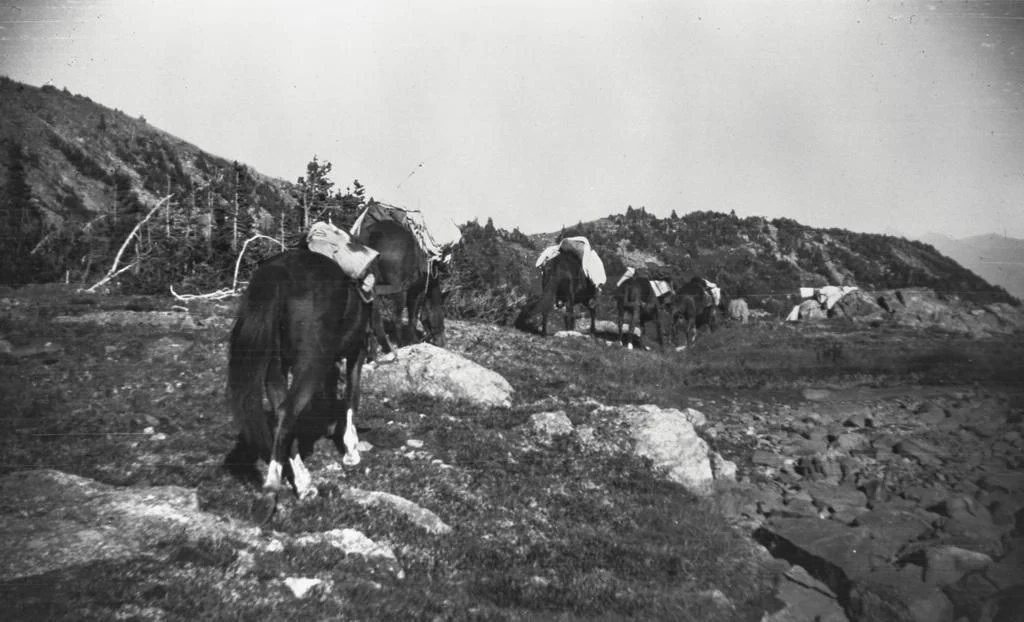
Decades later, prospectors working toward the Pegleg Mine needed to move equipment and supplies into steep country.
Their solution was not a road.
It was a packhorse trail.
The route was cut from Johnson’s Landing toward the mine. Building it through the canyon required drilling and blasting; one worker died during construction. After years of effort, the operation ultimately produced only about 31 grams of gold before being abandoned.
The mine barely justified itself.
The trail remained.
Infrastructure measured by a body
A trail designed around a horse has a different geometry from a road designed around an engine.
Gradient matters differently.
Turning radius matters differently.
Footing matters.
Water matters.
The animal has to place four feet through terrain that a wheeled vehicle either modifies or avoids.
A good horse is not simply carrying a person through landscape.
It is continuously reading it.
Loose rock.
Mud.
Roots.
A shallow crossing.
A soft edge.
The rider feels many of those decisions only after the animal has already made them.

Speed
The most interesting quality of horseback travel is not that it is fast.
It is that it occupies an unusual middle speed.
Walking preserves detail but limits range.
Machines increase range by compressing detail.
A horse does both imperfectly.
The valley stays large.
A ridge takes time to approach.
But an entire day can still cover meaningful country.
The result is a distance that retains texture.
The animal changes the schedule
A machine waits until it is needed.
A horse does not.
It eats.
Drinks.
Sweats.
Tires.
Can become uncomfortable.
Needs attention before and after the traveller decides the day's movement is complete.
This inserts another living body into the planning.
The route is no longer organised only around the person riding it.
That changes the ethics of movement as much as the pace.


Old trails
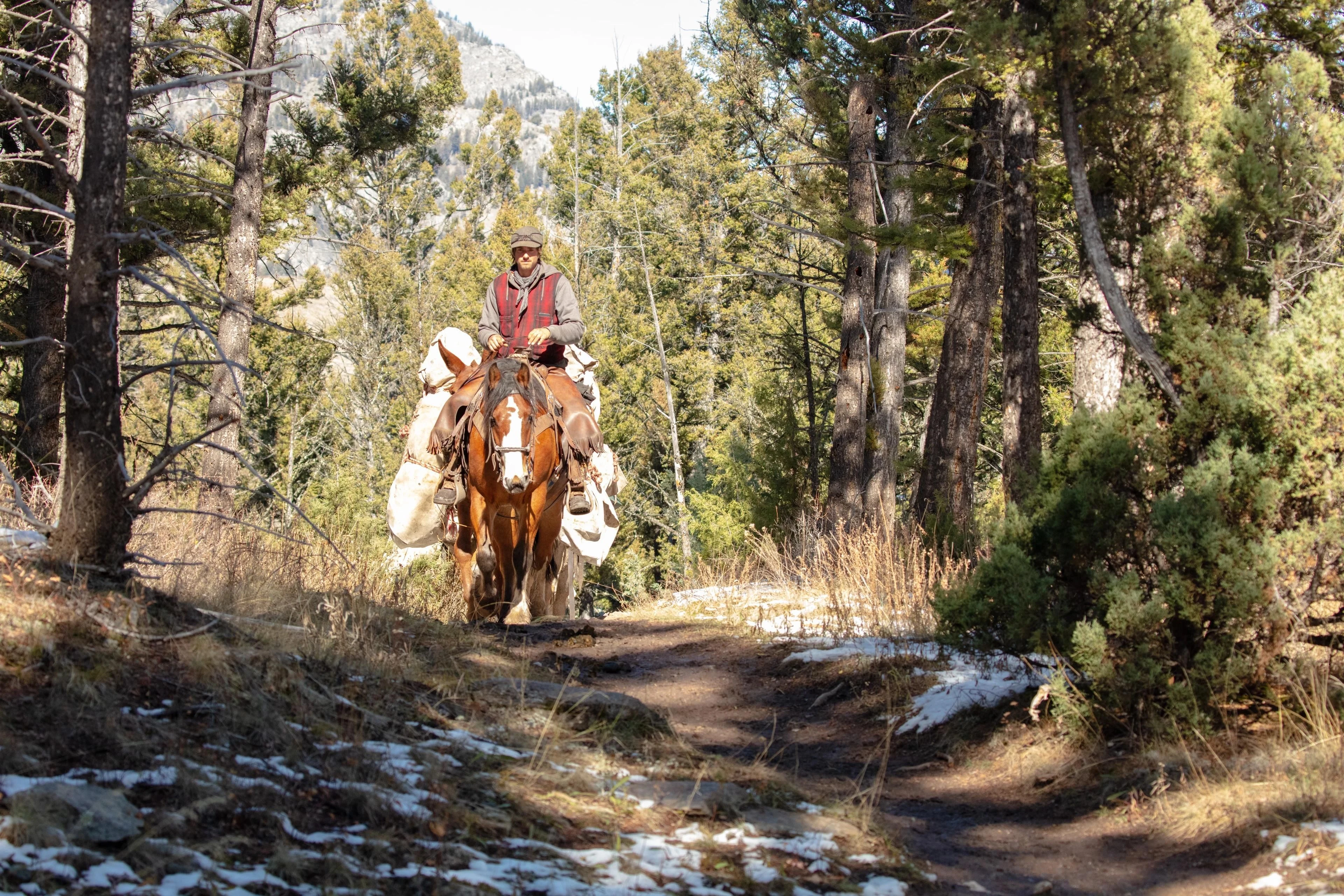
Across the backcountry, some routes survive precisely because animals once made them useful.
Mining.
Guiding.
Packing.
Ranching.
Movement of food and tools.
The trail is evidence of a time when access had to conform much more closely to terrain.
A modern vehicle asks:
Can the ground carry the machine?
A horse asks something subtler:
Where can we pass?
The destination may be identical.
The distance is not.